Day 4 · the through-line
Collective Memory
What a culture keeps, and what it lets go
Today: lists and loops — how to hold many things at once, and how to do the same thing to every one of them.
That's the technical skill. The human story underneath it is memory: who gets remembered, who gets to be forgotten, and what changes when the thing doing the remembering is a machine that never forgets.
Two kinds of memory
violations = []
for person in community:
if person.broke_a_rule: violations.append(person)
Three lines. A list, a loop, a condition — and a community that now keeps a permanent record of everyone's worst day.
Two kinds of memory
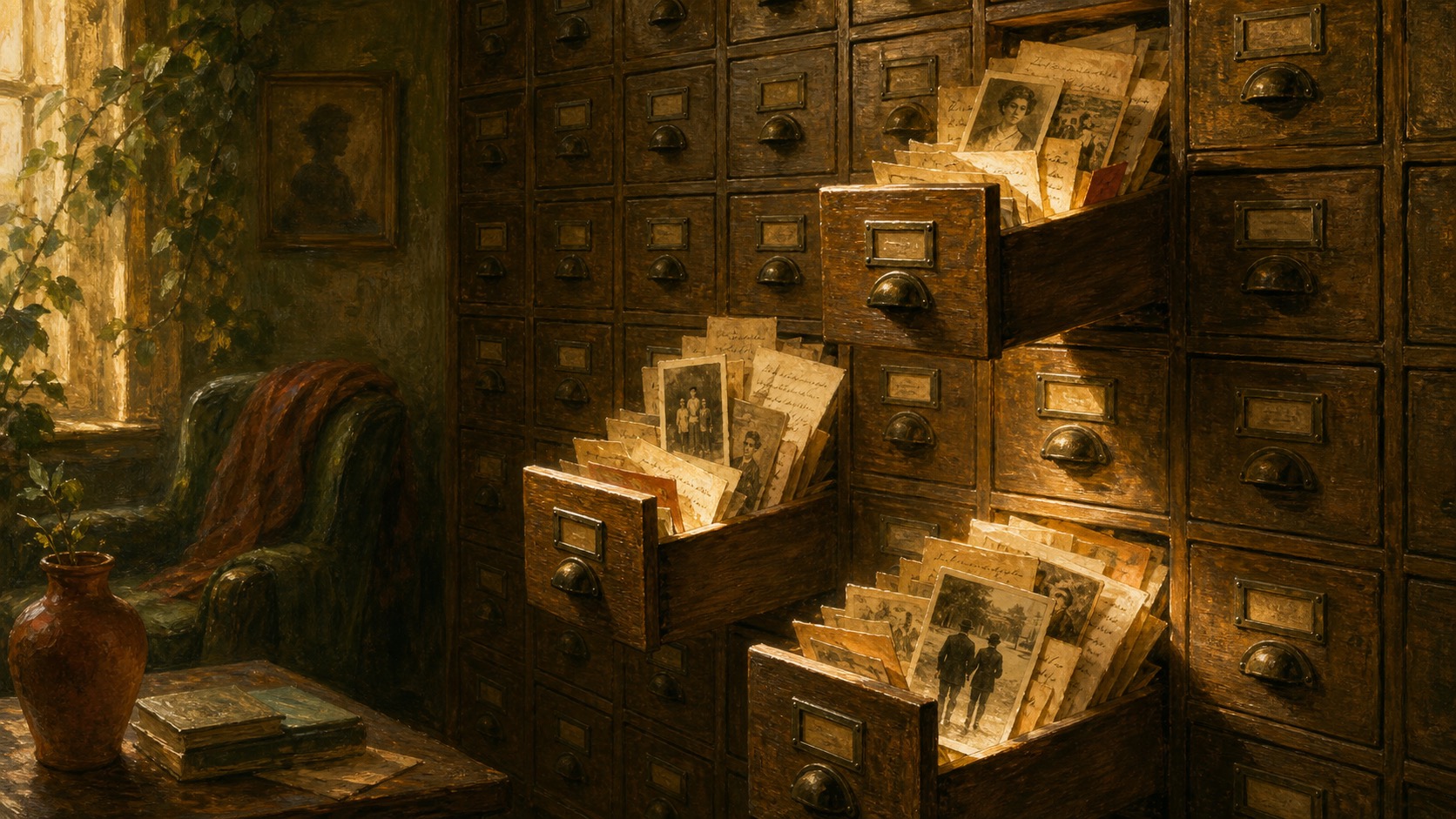
For most of human history a community's memory was a human thing — and being human, it forgot.
- Human memory is selective, contextual, forgiving. Things fade. Stories soften with each retelling. Time heals; the village lets it go.
- Digital memory is total, fixed, unforgiving. Everything is recorded. A data point doesn't mellow with age; your past quietly decides your future access.
Two kinds of memory
That shift — from a memory that mercifully forgets to one that structurally can't — is the whole lecture.
Forgetting, it turns out, was never just failure. It was also grace.
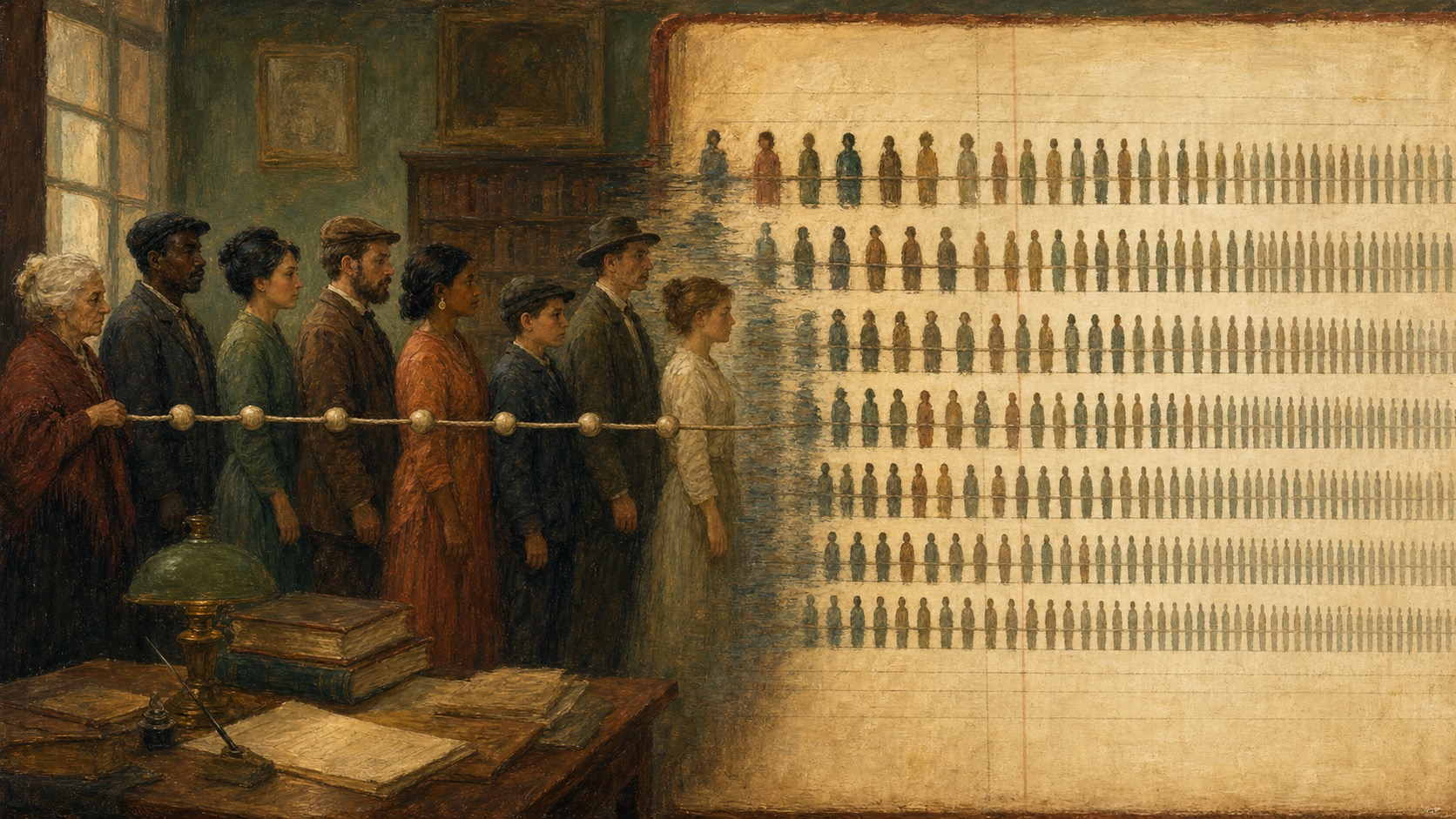
A list is a population
community = ["Mary", "John", "Kate", "Ahmed", "Rosa", ...]
Notice what just happened. A moment ago these were people. Now they're a population — a thing you can sort, filter, slice, and count all at once.
A list is a population
The list is the exact point where the individual becomes the demographic.
That move is enormously powerful — it's how you'll hear a thousand voices at once.
And it is quietly dangerous — it's how a thousand people become a single number someone can act on.
A loop is a verdict, repeated
A village elder judged case by case — knowing the person, weighing the circumstances, leaving room for the exception, the mercy, the second look.
for person in population: apply_the_same_rule(person)
A loop doesn't. It presses one rule onto every single person — no context, no exceptions, thousands in a blink.
A loop is a verdict, repeated
"The same rule for everyone" sounds like the definition of fairness.
It is also the end of mercy.
The loop cannot see the one case that deserved an exception, because seeing exceptions is exactly what it was built to stop doing.
Remember the threshold from last time? The loop is how one cutoff reaches a million people before lunch.
The power to count
Counting feels neutral — you're just tallying what's there.
But the power to count is the power to decide what matters, because first someone has to choose the categories, and choosing categories is choosing what's worth seeing.
Counter(violations).most_common()
One line, and a messy human record becomes a ranked list of "what's wrong here."
The power to count
So ask: who decided what counted as a violation? Who gets to see the tally? How does a count become a justification — for a policy, a denial, a crackdown?
And the question that never goes away:
what happened to the people who didn't fit any category, and so were never counted at all?
Historical echoes
None of this is new. Only the machinery is.
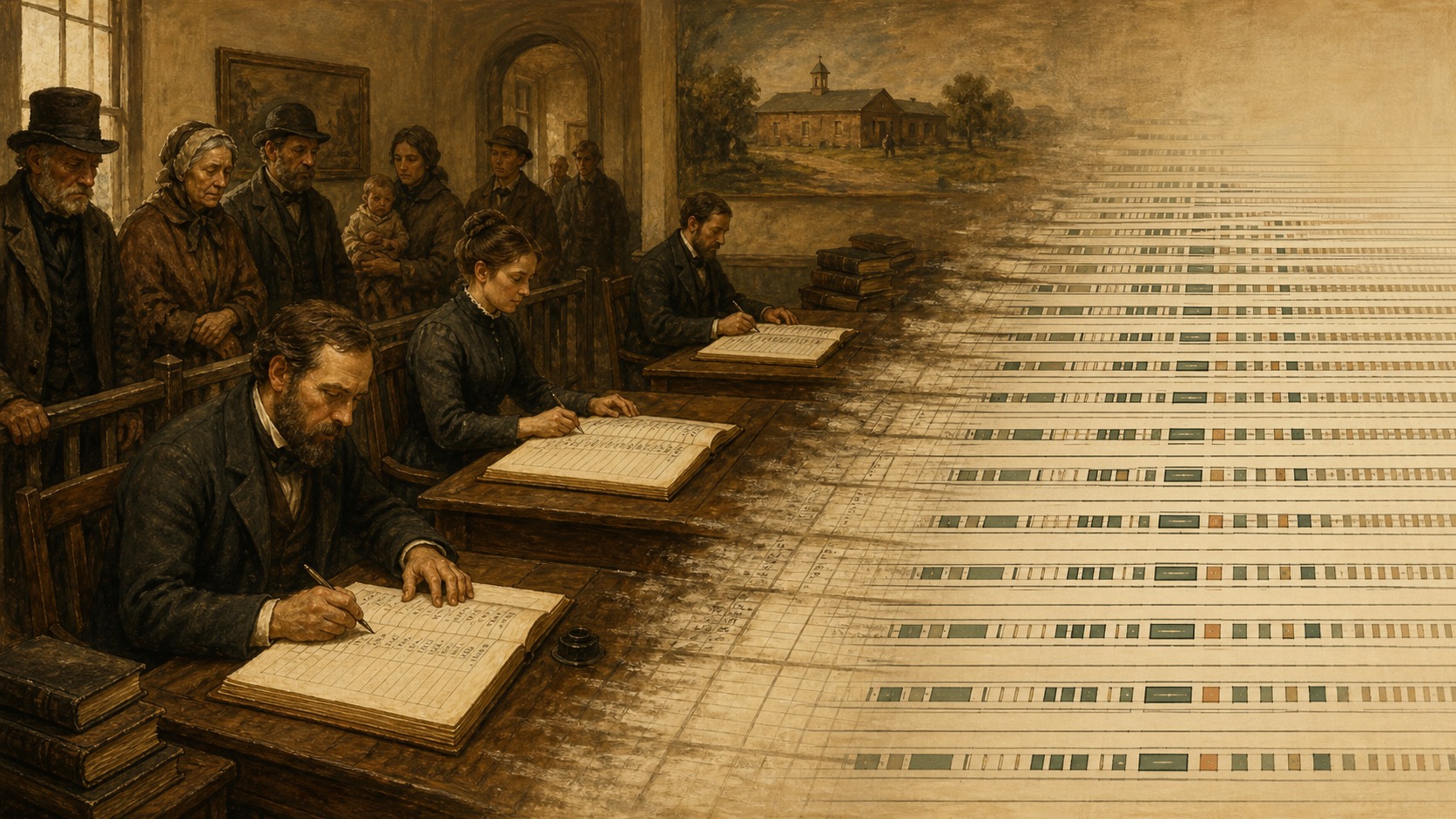
In the 1840s the Bellevue Almshouse in New York kept meticulous records of the poor, the sick, and the newly arrived. The historian Anelise Shrout describes what those records were for:
Historical echoes
Nineteenth-century immigration data was produced with the express purpose
of reducing people to bodies; bodies to easily quantifiable aspects; and
assigning value to those aspects which proved that the marginalized people
to [whom] they belonged were worth less than their elite counterparts.
— Anelise Hanson Shrout, "(Re)Humanizing Data", Current Research in Digital History 1 (2018)
Historical echoes
Now picture that same ledger as a Python list of dictionaries — {"name": "Mary", "status": "emigrant", "condition": "destitution"} — processed by a loop, ranked by a Counter.
The technology changes; the power to reduce, classify, and exclude is the constant.
When you write your own loops this week, you're picking up a very old instrument.
What we choose to keep
Lists and loops were never just technical skills. They're how a culture decides what it remembers and what it's allowed to forget —
and now you're one of the people holding the pen.
What we choose to keep
Our 93 comments are themselves a frozen memory: strangers caught mid-argument, who will never get to take it back, soften it, or grow past it.
As you count and sort them this term, keep the live question open:
Am I remembering these people, or just reducing them?