Day 10 · the through-line

Data Archaeology

Where found data comes from

Today you start working with found data — a table you didn't make, full of words real people wrote for their own reasons.

Before you load a single row in pandas, one idea has to land:

That data is not raw. It's an artifact.

Someone produced it, by making choices. Reading it well is closer to archaeology than to chemistry.
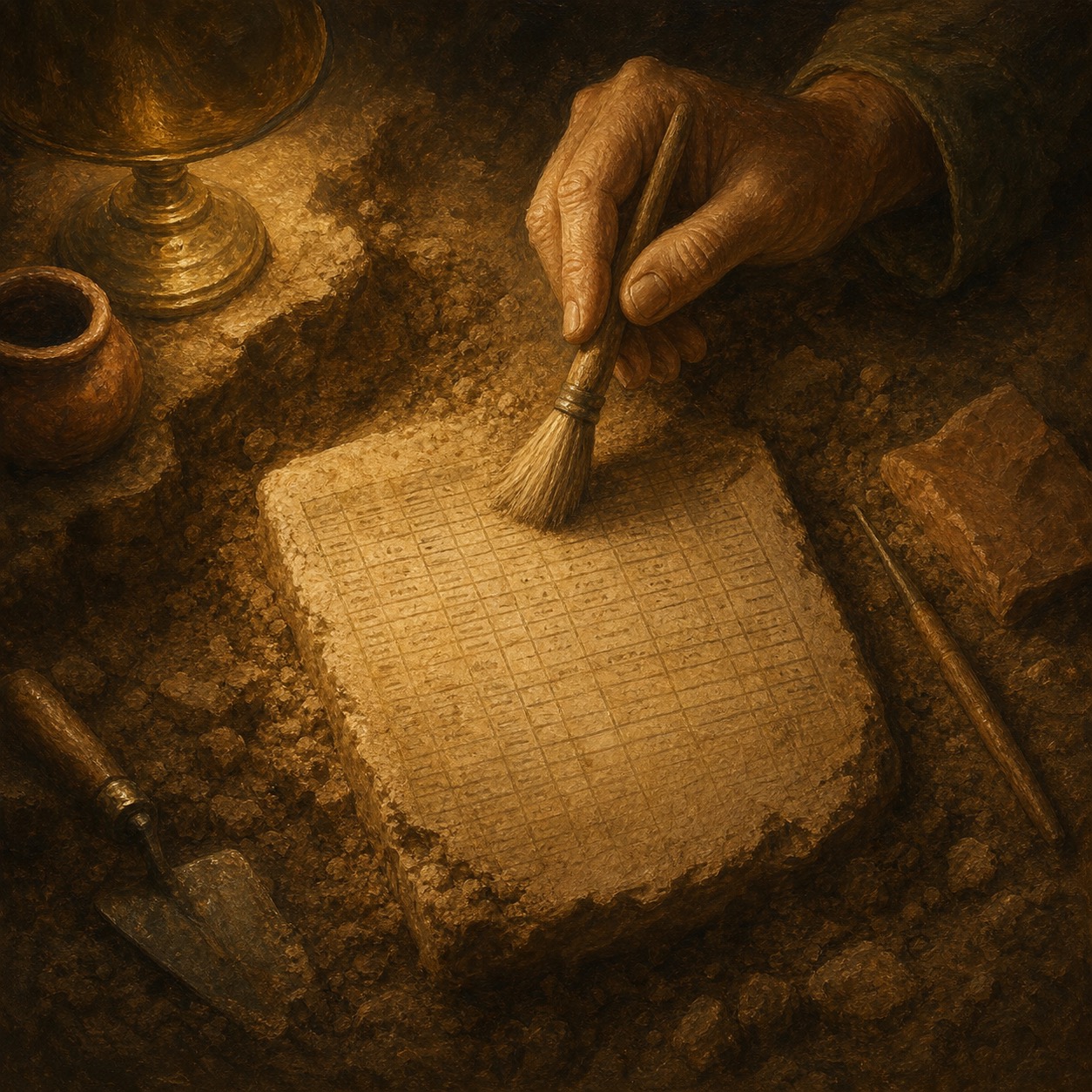
A hand brushing dust from a half-buried clay tablet inscribed with faint spreadsheet rows

Reading traces of a life

An archaeologist never has the thing itself — the meal, the ritual, the household. They have what survived: a pottery shard, a posthole, a midden of bones. From those traces they reconstruct how people lived.

Pottery shards → ancient dining habits.
Dataset rows → cultural patterns.

Reading traces of a life

You're making the same move. Our 93 comments are a dig site — traces a community left while arguing about a law.

You'll excavate patterns from them, but like any archaeologist you have to remember you're holding shards, not the meal: a partial record of something larger you'll never fully recover.

You found it; you didn't make it

Two kinds of data — and this course runs almost entirely on the second.

You found it; you didn't make it

Found data is thrilling because it's real — nobody was performing for a researcher.

It's treacherous for exactly the same reason: it wasn't built for your question, its gaps aren't random, and you weren't there when it was made.

"Found" never means "neutral."

"Raw data" is an oxymoron

We say "raw data" as if it arrived straight from nature, untouched. It never did.

By the time a comment reaches your notebook, someone chose which platform to pull from, when, which field counted, and what got dropped — remember the fragments in our own corpus, comments broken apart by the scraper, and by our own cleaning.

A river of faces pouring through a sieve that emits neat identical cards while most spills off uncaptured

"Raw data" is an oxymoron

Every dataset is the survivors of a collection process.

And the ones who didn't survive — the people who never posted, the comment that was deleted, the language the scraper couldn't parse — leave no row at all.

The empty seats aren't in the file.

Treat "raw" as a warning label, not a fact.

Hear, don't extract

Listen to the verbs data culture uses: mine, scrape, harvest, crawl, extract.

Every one treats people like ore — raw material to be stripped out and processed.

This course asks you to change the verb to hear.
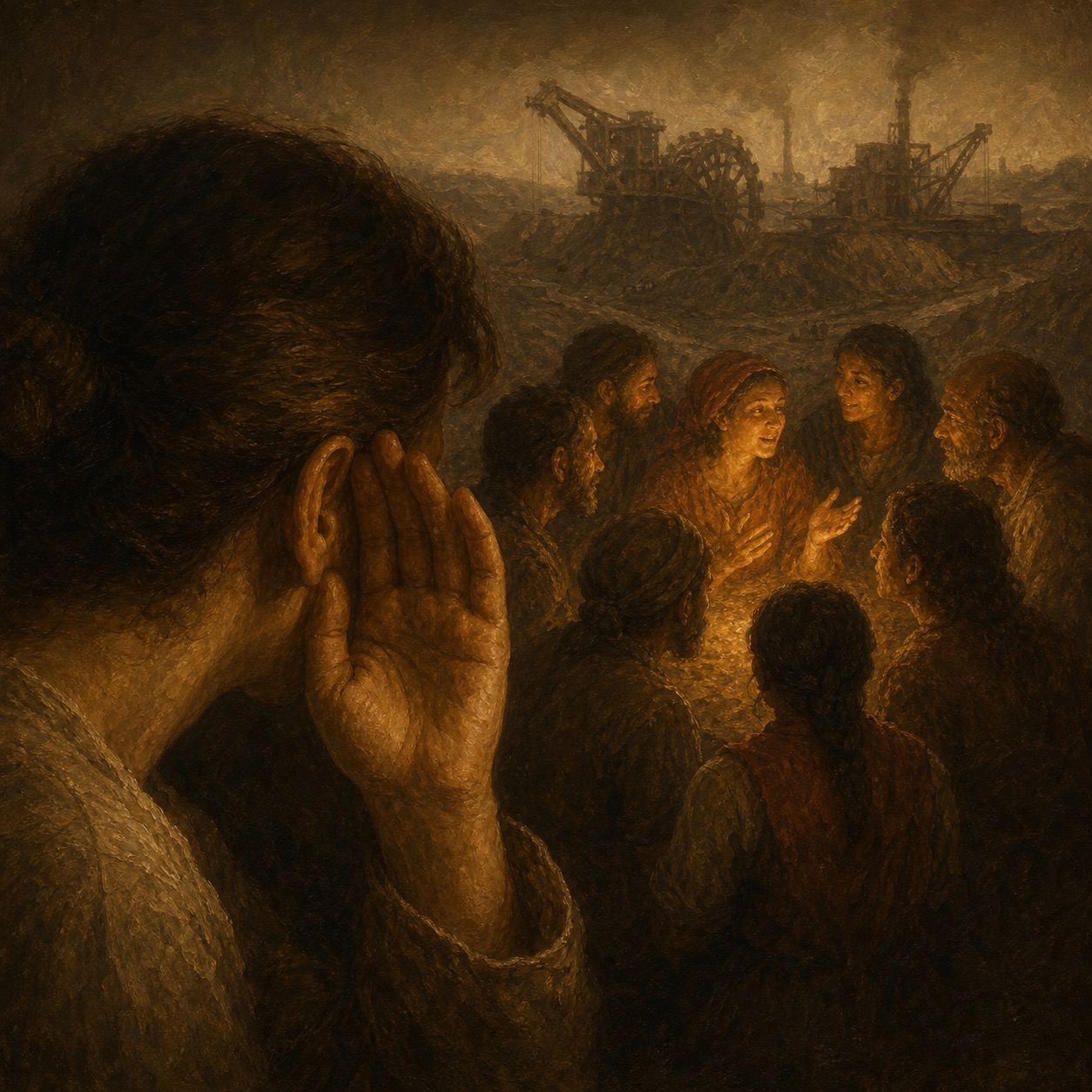
Hands cupped to listen toward a crowd of speaking figures, against faint mining machinery

Hear, don't extract

"Hearing" assumes the other end is a someone — with something to say and a claim on being received with care.

That one swap reframes the ethics of collection, which you'll practice in code today (robots.txt, fair use, attribution).

The legal question is "am I allowed to take this?" The humanist question underneath is "am I listening, or am I extracting?"

Both matter. Only the second is about the people in the data.

Keep a data biography

Before the analysis, become the artifact's biographer. An archaeologist logs an object's provenance; you log your data's. Four things, written plainly in your notebook:

Keep a data biography

This isn't busywork. It's credibility.

A reader can only trust your reading if they can see where the data came from and what you did to it — and remember that a single row is layered: surface (who, what, when), cultural (the trend it hints at), societal (the values underneath).

You're interpreting human cultural behavior. Handle it with care.

↤ Lectures·Full text
← → navigate · click to advance