Connotations & Code
Why no number is ever neutral
Every arrow from a lived human fact to an "insight" is a human choice. Today we turn that on the very first thing you'll touch — a plain number.
What does the count say?
Our corpus: 93 YouTube comments under one CBS News video (Aug 20, 2025) about the federal ruling that blocked Texas's law putting the Ten Commandments in public-school classrooms — copied soon after with a free browser scraper.
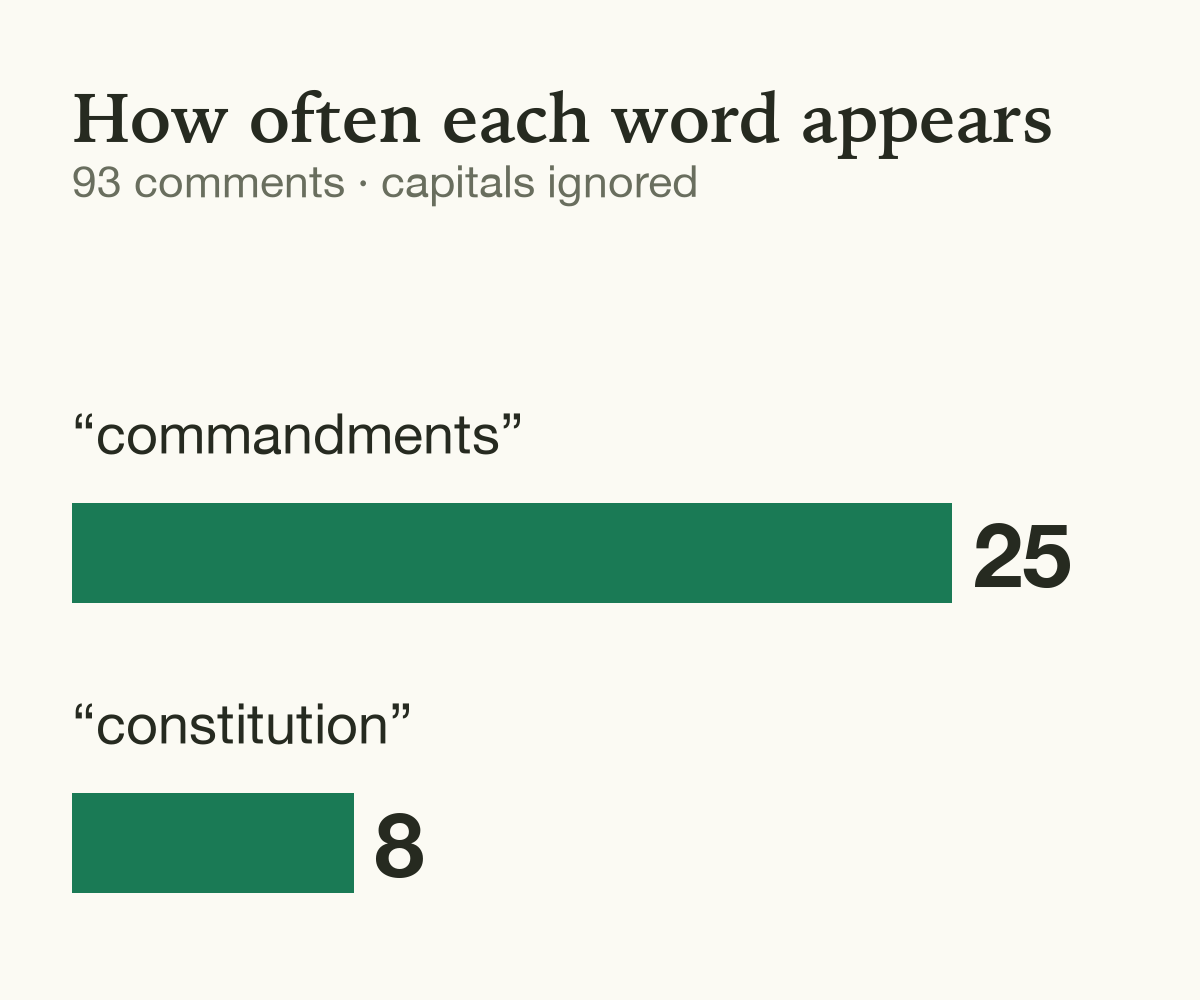
Capitals ignored, "commandments" appears 25 times. "Constitution" appears 8.
Flat, true, countable.
So what is it telling us?
Denotation and connotation
You already own the tool this lecture needs.
- A word's denotation is what it literally points to. House, home, and residence denote the same thing: a building people live in.
- Its connotation is everything it carries on top — warmth, money, bureaucracy, belonging.
Home and residence denote alike and connote worlds apart.

Denotation and connotation
Now the move that makes you a data humanist:
Numbers have connotation too.
"Single-mother household" denotes a category on a form. It connotes a whole contested story about blame and worth — and which story you hear depends on who's speaking.
The denotation is the surface. The connotation is where the culture lives — and where the argument is.
The myth of neutral data
Three comforting things people say about data. Each one is too simple.
- "Data doesn't lie." — It doesn't have to lie to mislead. It can simply leave things out.
- "The numbers speak for themselves." — They never do. Someone always speaks for them, by choosing the frame.
- "It's just objective analysis." — Every dataset records somebody's choices about what was worth counting.

The myth of neutral data
Data carries the values, assumptions, and blind spots of whoever collected, sorted, and counted it.
That isn't a flaw you can scrub out. It's the opening lecture's diagram again: every arrow there was a choice, and so is every column here.
A dataset is a record of choices before it is a record of anything else.
Same numbers, three stories
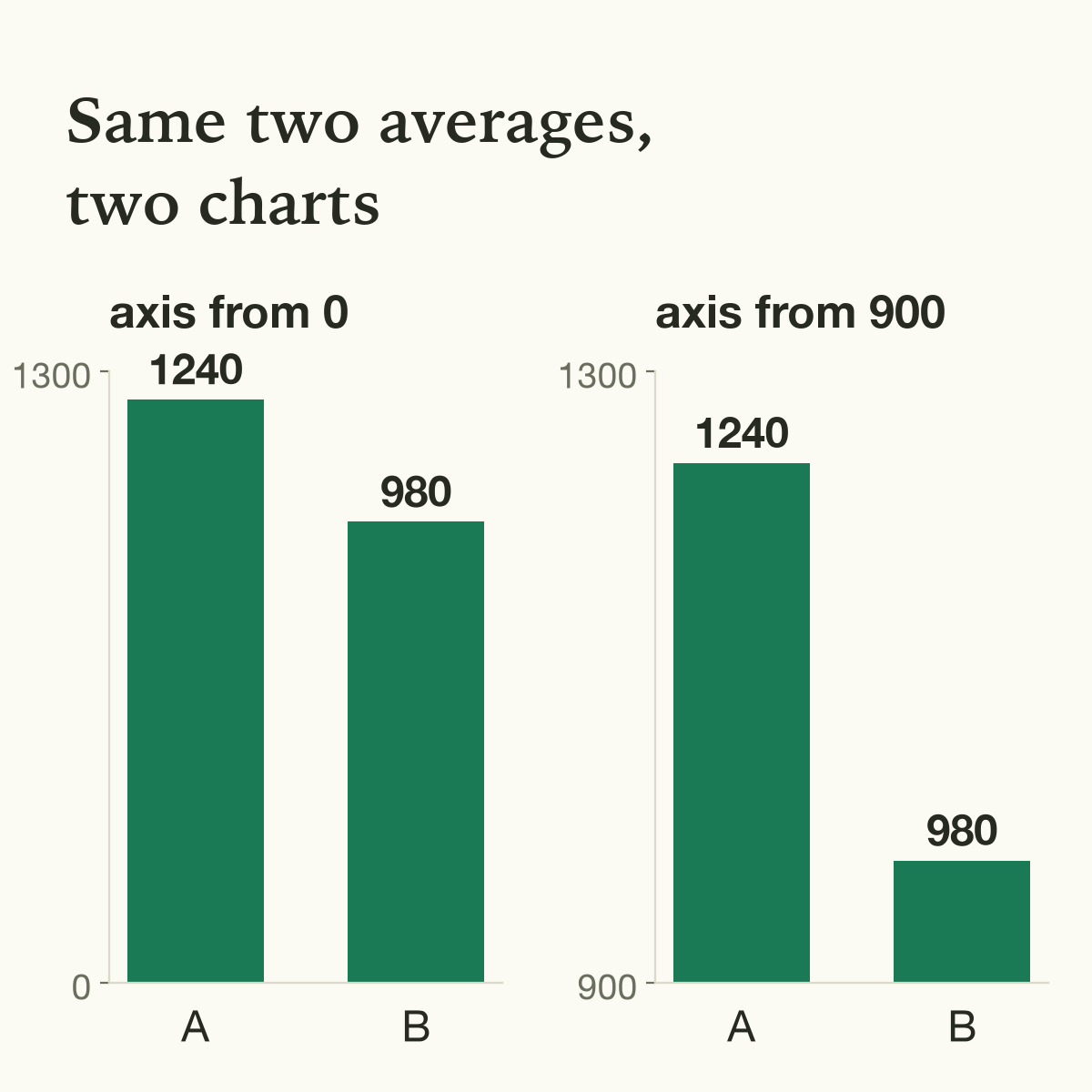
School A — average SAT 1240
School B — average SAT 980
Watch the same denotation spin into three connotations, each quietly handing the blame to someone else:
- Deficit story — School B's students are underperforming. (It's the kids.)
- Systemic story — School B is under-resourced and underfunded. (It's the system.)
- Cultural story — the SAT measures one kind of knowledge. (It's the test.)

Same numbers, three stories
Nothing in the numbers tells you which story is true. They show a difference, not its cause.
And even the difference can be staged. Same two numbers, two charts — on the right, School B looks like it's collapsing.
Choosing the story is the human part — an argument about fairness, wearing the costume of arithmetic.
Who's doing the telling?
If numbers don't tell their own story, someone does — usually someone with power over the frame.
- Institutions define the categories — a government writes the census boxes, a university decides what "success" counts as
- Media sets the frame — the headline, the axis a chart starts at, the context cut for space
- Researchers choose the question — who gets sampled, and who paid for the asking

Who's doing the telling?
So the reflex this course wants to build. Every time a number lands in front of you, ask:
Who collected this, why, and whose story does it tell?
The missing and the uncounted
The loudest thing about a dataset is often what isn't in it.
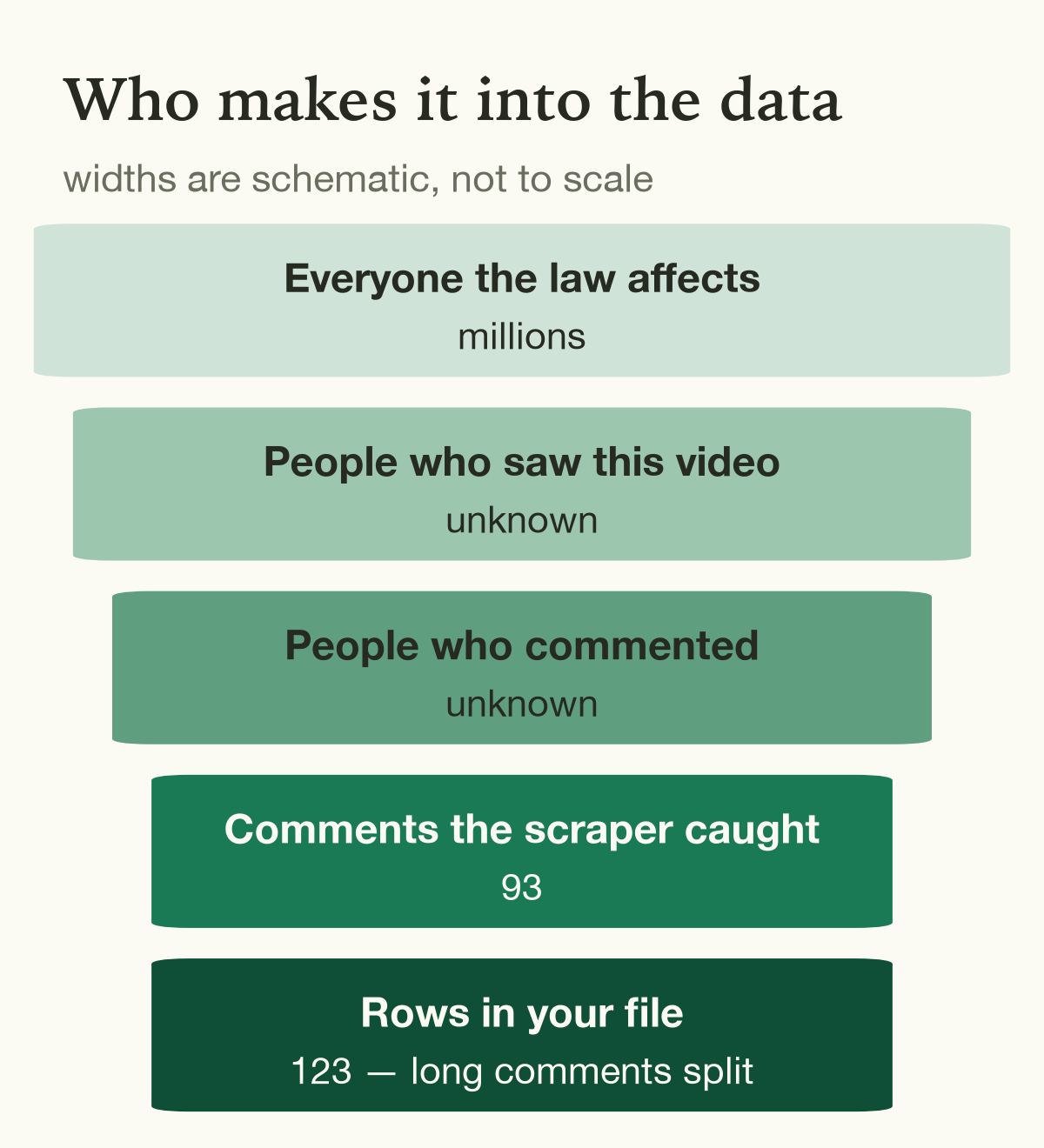
Our 93 comments are not "the public." They're the slice of the public that posted — people online, fired up enough to type, willing to be seen arguing.

The missing and the uncounted
The woman from the opening lecture posted. Her neighbor — who felt just as strongly and never typed a word — is not in the file at all. Neither is anyone without the wifi, the time, or the nerve.
Absence from the data is not absence from reality.
So: code is not neutral
Code inherits every connotation above — and adds its own, because code runs on definitions, and a definition is a decision.
Over the next weeks you decide. What counts as a "word" when you split a comment? Which words are "stopwords" worth deleting? What score makes a comment "positive"? Where do you cut one topic from the next?

So: code is not neutral
Each choice is a small act of interpretation that looks like a neutral function.
And those choices don't merely encode a value — they argue one.
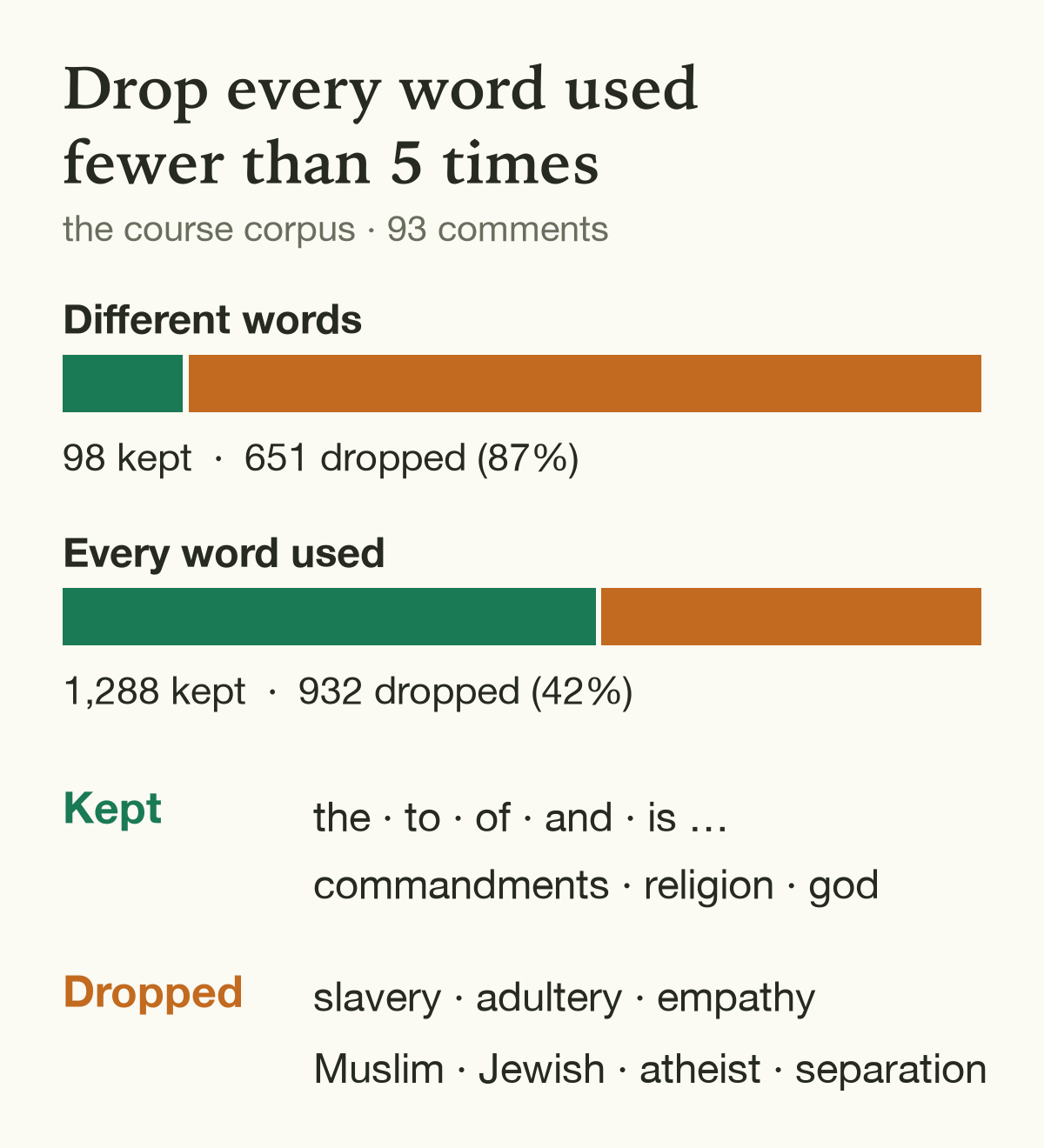
Drop every word used fewer than five times, and your code has claimed that rare words matter less. In our file, that one rule deletes 651 of 749 different words.
Code isn't only structure. It's rhetoric.